Brennan uses HDPE pipeline to transport sediments as a safe and cost-effective method to ensure that materials remain within the sealed transport system to eliminate unintended cross contamination or leakages. This method is most commonly used with hydraulic cutter head dredges, but can also be implemented on mechanical systems.
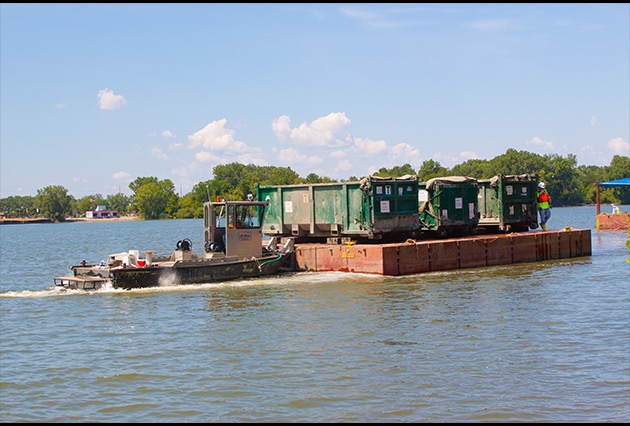
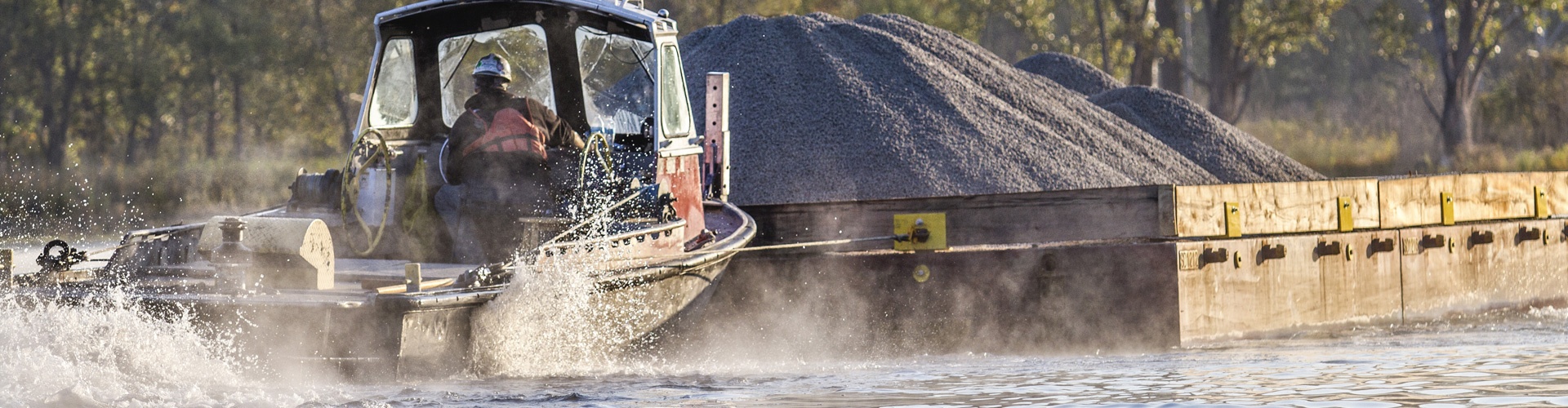
HDPE pipeline has several advantages over mechanical transport on an environmental project.
Advantages of an HDPE Pipeline
- Sealed system transport (prevents cross contamination)
- Less impact to surrounding infrastructure
- More cost effective
- Fewer logistical constraints
- Long distance transport possible (up to 12 miles) using boosters
- Can be configured for both hydraulic and mechanical dredging approaches
Long Distance HDPE Pipeline Transport
J.F. Brennan Company has experience in long distance transport using HDPE Pipeline. We have pumped sediment slurry up to 12 miles using sound attenuated boosters. This system was very effective in reducing project impact on local infrastructure, recreational boaters, and commercial traffic.
Mechanical Dredging with HDPE Pipeline Transport
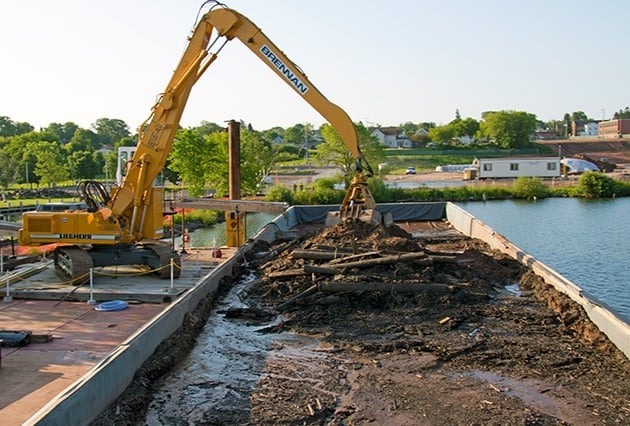
Brennan has experienced projects where a combination of mechanical dredging and hydraulic transport yields the best results. The operation typically includes using mechanical methods to dredge the contaminated sediment and place it into a mixing system where it is turned into slurry. This includes a debris separation unit, followed by a custom-designed slurry tank where clean water is added and the material is liquefied. From here the material is pumped into an HDPE pipeline for final transport to the disposal area.